When the Map Runs Out

What Mid-Career Professionals Face — and What Helps

Something shifts in a coaching conversation when the person on the other end has been doing the work for a while. Not just the job. The whole arc of it — the early ambition, the proving, the promotions, the adaptation. The way they learned to speak differently in certain rooms. The slow drift from what they’d imagined their career would feel like to what it actually became.

I work with many people at that juncture. Somewhere between fifteen and thirty years into a professional life, they find themselves asking questions they thought were answered. Not crisis questions, necessarily. Something quieter and more persistent: Is this what I intended? And if not — how much of it did I choose, and how much just happened?

That’s the moment I find most interesting. And most actionable.


Research published in the Socio-Economic Review in early 2025 found something that should matter to every manager, executive, and high-achieving professional over 40: job satisfaction follows a U-shaped trajectory specifically for managerial and professional workers, hitting its lowest point during their 40s before rebounding later in life. This isn’t a universal phenomenon — it appears to be tied to the particular psychology of high-investment, high-identity careers.

The Trough No One Warned You About

In other words, the people who care most about their work are also the most likely to find it quietly grinding them down at midlife.

The numbers on career regret are striking in their breadth.

A survey conducted by Resume Now found that roughly two-thirds of workers report career-related regrets, with the numbers peaking among millennials and Gen X workers — reaching around 70% — before easing somewhat as workers approach retirement. Read that again: seven in ten professionals in their prime earning years carry some version of “I’m not sure I made the right call.”

What are they regretting? Staying somewhere a few years past the moment they should have left, optimizing for security when meaning was available, building expertise in a direction that made sense at 28 and feels like a narrowing tunnel at 48.


The Problem with “Career Paths”

The phrase itself is part of the issue. A path implies forward motion on a known route — most people in professional careers spent their 20s and early 30s on something that worked like that. There were milestones. Ladders. Legible next steps.

Then, somewhere in the middle decades, the concept of the path breaks down. Midlife researchers describe it as a turning point for existential questioning and narrative reconstruction, in which individuals shift away from extrinsic rewards such as status and financial gain toward intrinsic values such as purpose, balance, and authenticity. This is a natural developmental transition, not a malfunction.

But workplaces aren’t designed for it. Most career development resources focus on either early-career launching or executive leadership, leaving mid-career professionals without adequate frameworks for what they’re actually experiencing. The tools that worked before — goal setting, skill-building, networking toward the next promotion — don’t address what’s actually driving the unease.

What’s driving the unease is almost never tactical. It’s about alignment.

The growing gap between how someone is spending their professional life and what they actually value.


Why the Standard Advice Misses the Mark

When mid-career professionals start feeling stuck, the advice they typically receive is structural: update your resume, expand your network, pursue a lateral move, acquire a new credential. Sometimes those things help. Often, they don’t, because they address the container, not the contents.

The research on what actually produces lasting career satisfaction is fairly consistent. Acceptance and Commitment Therapy (ACT), an evidence-based psychological framework, has demonstrated effectiveness by building psychological flexibility — the capacity to stay present, respond openly to internal experiences, and take meaningful action in line with personal values. Applied to career development, this framework points to something important:

Research on ACT processes found that reductions in cognitive fusion — the tendency to become locked into a particular story about yourself — combined with increases in values-based action were significantly related to reductions in distress and depression. For career coaching purposes, this translates directly: the professionals I work with who make the most meaningful changes aren’t the ones who figured out the “right” answer. They’re the ones who got enough distance from their accumulated story to ask what they actually want — and then acted on that, incrementally, in the real world.

Motivational Interviewing research adds another layer here. People don’t change their professional trajectories because someone convinces them they should. They change when they articulate, in their own words, what matters to them and how their current situation relates to that. The coach’s job isn’t to provide the map. It’s to ask better questions than the person has been asking themselves.


The goal is to develop clarity about what you value and the willingness to act on that clarity.

The Identity Problem

There’s something beneath the question of career dissatisfaction that often goes unnamed. When I work with mid-to-late career professionals — particularly those who’ve built significant expertise or institutional standing — the real challenge is usually an identity one.

After two or three decades of doing a thing, most people are the thing they do. The professional and personal identities have fused in ways that make any reconsideration feel threatening. Not just “I might have to change jobs,” but “I might have to not be the person I’ve been.”

Researchers studying midlife reinvention have observed that imagination plays a key role — helping people identify different options, reconsider personal narratives, and open up imagined futures. But the cultural frame we typically apply to midlife actively works against this. “Midlife crisis” yields over 10 million search results, while “midlife opportunity” returns fewer than 10,000. The dominant narrative is one of loss and disruption, not expansion.

Narrative Coaching

Narrative coaching is one of the approaches I draw on, which works specifically at this level. It starts from the premise that the story a person tells about their professional life isn’t an objective account — it’s a construction, built from selected events, filtered through current assumptions, and shaped by what seemed important at each stage. When that story stops serving the person, the work is to examine it, identify the gaps between lived experience and the narrative, and begin building something more accurate.

That isn’t therapy. It’s a practical skill. And it’s available to anyone willing to look inward for answers.


The Good Outcomes

For professionals who do decide that change is warranted — whether that’s a different organization, a different role, a different field, or a structural renegotiation of their current situation — the data is more encouraging than most people expect.

Across surveys of professionals who changed careers at midlife, the majority reported feeling happier, more satisfied, less stressed, and more fulfilled after the transition — and over 80% said they wished they had made the change sooner, on average about two years sooner.

The fear that keeps people locked in place — the “what if I’m wrong” calculation — is almost universally overweighted relative to the actual outcomes people report. That’s not an argument for impulsivity. It’s an argument for treating the fear as data rather than as a stop sign.

Research on midlife career transitions found that participants reinterpreted past experiences, questioned long-held values, and redefined what success meant to them — a process that researchers found aligns with longitudinal evidence showing that midlife individuals increasingly prioritize emotional meaning and flexible goal adjustment over rigid performance metrics.

That last phrase — flexible goal adjustment — is worth sitting with. It doesn’t mean abandoning ambition. It means allowing the targets to evolve as you evolve. The professional who built a career around one version of success at 30 is not required to maintain that same definition at 50. In fact, the research suggests that rigidly maintaining it is part of what makes the trough so pronounced.


What Actually Changes in Coaching

I want to be direct about what coaching is and isn’t, because the term gets used loosely.

Coaching isn’t advice. It isn’t mentorship, and it isn’t therapy. It’s a structured process for thinking more clearly about your own situation, clarifying what you actually want, and developing the capacity to act on that more reliably.

For mid-to-late career professionals, the most common work I do falls into a few categories:

Separating the story from the situation. Most people’s sense of being stuck is at least partly narrative — a well-practiced interpretation of their circumstances that closes off options before they’re examined. Getting underneath the story to the actual situation almost always reveals more choice than the person initially perceived.

Values clarification under conditions of competing pressure. It’s one thing to identify what matters to you in the abstract. It’s another to get clear on it in the context of actual financial obligations, institutional ties, relationships, and time. That’s where the work gets specific.

Building tolerance for the transition period. The hardest part of any significant professional change isn’t making the decision. It’s navigating the in-between — when the old structure has loosened, and the new one isn’t yet solid. People underestimate how disorienting that phase is and overestimate how long it lasts.

Accountability that doesn’t rely on motivation. Motivation fluctuates. Action structures don’t have to. One of the most useful things a coaching relationship provides is a consistent external check on whether a person’s stated intentions are reflected in their behavior — without judgment and with adjustments when needed.


A Note on Timing

One consistent thing I observe when working with mid-to-late-career professionals is that people tend to reach out later than is optimal. Not dramatically late — but there’s often a period of a year or two, sometimes longer, during which someone knows something needs to shift, but doesn’t do anything about it.

Recent research on career regret found that regret often lingers in the background, feeding disengagement, stalling innovation, and eroding morale — without necessarily leading to any visible action. The cost of that period is real, even when it’s invisible. Years of staying in situations that are depleting rather than developing, and tolerating a mismatch between their values and their work.

The question worth asking isn’t “Is my situation bad enough to warrant help?” It’s “Is my situation as good as it could be?” Those are different questions. The first one tends to keep people in a wait-and-see posture for years. The second one opens up earlier.


Where to Start

If this resonates — if you recognize the U-shaped dip, or the identity fusion, or the weight of two-years-too-late regret — the most useful thing I can suggest is a conversation.

I offer a Free Exploratory Video Call to see if we’re a good match. You can book it here: Free Exploratory Session

The map runs out for everyone at some point in a serious career. What you do when it does — whether you stay frozen, improvise badly, or actually examine where you are and where you want to go — is one of the more consequential choices of the second half of a professional life.


Rob Kaminoff is a certified life and career coach. He holds a B.S. in Counseling Psychology and an M.S. in Social Psychology and specializes in working with people at major professional and personal inflection points.


Sources

  1. Socio-Economic Review (2025). “Is there really a mid-career crisis? Job satisfaction follows a U-shaped curve only among highly skilled workers.” ScienceDaily. https://www.sciencedaily.com/releases/2025/01/250109141225.htm
  2. Resume Now Survey. “66% of Workers Have Career Regrets.” Cited in Cha Ching Queen (2026). https://chachingqueen.com/common-career-regrets/
  3. Journals of KmanPub — PsychNexus (2024/2025). “Career Transitions in Midlife: Exploring Meaning-Making and Role Adjustment.” https://journals.kmanpub.com/index.php/psychnexus/article/download/3939/6747/19262
  4. Hayes, S.C. et al. “Acceptance and Commitment Therapy.” Psychology Tools. https://www.psychologytools.com/resource/what-is-acceptance-and-commitment-therapy-act
  5. Foody, M. et al. (2018). “Improvements in Depression and Mental Health After ACT are Related to Changes in Defusion and Values-Based Action.” PMC. https://www.ncbi.nlm.nih.gov/pmc/articles/PMC5830477/
  6. British Psychological Society (2025). “Midlife Reinvention — Turning Crisis into Opportunity.” https://www.bps.org.uk/psychologist/midlife-reinvention-turning-crisis-opportunity
  7. Joblist (n.d.). “Midlife Career Crisis.” Survey data on post-transition outcomes. https://www.joblist.com/trends/midlife-career-crisis
  8. Markjory (2025). “The Silent Crisis of Mid-Career Professionals.” Medium. https://medium.com/@markjory2_54413/the-silent-crisis-of-mid-career-professionals-navigating-the-middle-plateau-c86f25eb4963
  9. Compunnel (2025). “Why Career Regret Is on the Rise.” https://www.compunnel.com/blogs/why-career-regret-is-rising-and-chros-must-rethink-retention-2025/


The Career You Built vs. The Life You Wanted

Businessperson in a dark suit stands at a window, gazing at a sunset-lit city skyline from an office.
Worn out brief case

I started noticing the pattern a few years into my coaching practice.

People would come to me — accomplished, credentialed, often well into careers they’d spent a decade or more building — and describe a feeling they couldn’t quite name. Not failure. Not burnout, exactly. Something more like a persistent low-grade dissonance between the life they were living and the life they expected.

What struck me wasn’t the feeling itself. It was how many people felt it, and how quietly. As if admitting it were a kind of ingratitude. As if the right response to a successful career were simply to be grateful and move on.

The more I sat with clients in that space, the more I became convinced: this isn’t a personal failing. It’s a structural one. And it’s far more common than anyone talks about.

You Didn’t Choose This Life — You Inherited It

Here’s what I’ve come to believe after years of this work: most of us don’t consciously design the lives we end up living. We inherit them.

We absorb, early on, a set of assumptions about what success looks like, what security requires, and what a respectable life entails. From family. From culture. From the specific pressures of whatever industry we walked into at 22, when we were still figuring out who we were.

And then we execute. Often brilliantly. We build the career, accumulate the credentials, hit the benchmarks — all in service of a vision we accepted without ever really examining.

The career you built is often the career someone else would have wanted for you, optimized for criteria you took on without questioning. The life you actually want — built around what you genuinely value now, what makes you feel purposeful and alive — may be something you’ve barely had space to consider. Because the execution kept getting in the way of the examination.

This isn’t a character flaw. It’s a very human response to a world that rewards achievement and treats uncertainty as a liability. We do what works. We optimize for what gets recognized. We stop checking in with ourselves because checking in feels like a luxury we haven’t earned yet.

Until the checking-in stops feeling optional.

The Moment the Question Arrives

There’s usually a trigger — and it’s rarely dramatic. A milestone birthday that lands differently than expected. A promotion that should have felt like more. A Sunday evening that looks fine on paper and feels unbearable anyway. A conversation with someone who took a different path and seems, inexplicably, more at ease than you are.

The question that surfaces in these moments isn’t really “what went wrong?” For most people, nothing went wrong. The career went exactly as planned. The question is something closer to: whose plan was this, and is it still mine?

That’s an uncomfortable question to sit with. It requires acknowledging that some of what you’ve worked hardest for may have been in service of values you’ve since outgrown — or never fully owned in the first place. It can feel like ingratitude, or the beginning of a crisis.

It doesn’t have to be either. It can simply be the beginning of honesty.

Values Drift Is An Aspect of Growing Self-Awareness

I want to be specific here, because I think the conversation around “values” has become so abstract that it’s lost its usefulness. Values aren’t a meditation exercise. They’re the concrete things that make your days feel meaningful or empty.

Values drift is gradual and usually invisible. Early in a career, security matters enormously — it should. You optimize for stability, income, and upward momentum. Those are legitimate values at that stage of life.

But people change. What we need at 24 is rarely what we need at 40 or 60. Somewhere along the way, other things start mattering more — creative freedom, contribution, time, relationships, the actual texture of the work versus the status of the title. And the career, built for an earlier version of you, hasn’t kept up.

The gap between what you’re living and what you actually value now — that gap is where the hollowness lives. It’s not ingratitude. It’s not a weakness. It’s friction. The friction of spending most of your waking hours optimized for the wrong things.

The Stories We Tell Ourselves

One of the frameworks I draw on most in this work comes from narrative coaching — the idea that we’re all living inside stories, and that those stories quietly determine what we believe is possible.

Some of those stories serve us. Many don’t. And almost none of them were consciously chosen.

“I’m not the creative type.” “Fulfillment comes after security, not before.” “I’ve invested too much to change direction now.” “This is just what being a responsible adult looks like.”

These aren’t facts. They’re narratives — absorbed over time, reinforced through repetition, calcified into what feels like identity. And they do real work, keeping us exactly where we are, even when it has stopped working.

The question worth sitting with isn’t whether your career has been successful. It’s whether the story you’ve been living in still fits who you actually are — and whether it has room for who you’re becoming.

This Isn’t About Starting Over

I want to be clear about something, because this conversation can veer into territory that doesn’t serve most people: the idea that the answer to values misalignment is to quit everything and start over from scratch.

For some people, significant structural change is genuinely what’s needed. But in my experience, that’s the exception. For most, the answer is more nuanced — it’s not about dismantling what you’ve built, it’s about making what you’ve built actually work for you.

Sometimes that means a role change. Sometimes it means reorienting within your current organization toward work that uses more of what you’re genuinely good at. Sometimes it means reclaiming parts of your life outside work that have quietly been crowded out. Sometimes it’s a combination of all three.

What it almost always requires is clarity — an honest accounting of what you value now, what you’re willing to trade, and what you’re no longer willing to accept. That kind of clarity doesn’t arrive on its own, and it’s genuinely hard to manufacture while you’re still inside the structure you’re trying to examine. But it’s available. And when it arrives, it changes the way everything feels.

You Have The Permission To Change

If this resonates, you may be waiting for permission to take the dissonance seriously. To treat what you’ve been feeling not as ingratitude or weakness, but as information — as a signal worth following.

The discomfort isn’t a flaw in you. It’s a function of being someone who has grown beyond the goals they once set. That’s not a problem. That’s what growth actually looks like. And it points somewhere, if you’re willing to follow it.

You don’t have to follow it alone. In fact, trying to do it in isolation — inside the same environment, with the same habitual thinking, while managing a full schedule — is one of the least efficient ways to get there.

The work of aligning your career with the life you actually want is real work. It takes honesty, some discomfort, and usually a structured process for examining assumptions you’ve never had to examine before, but it’s some of the most meaningful work a person can do. Because it doesn’t just change what you do — it changes how every day feels for you.

View the free resources on my site, including the widely acclaimed: The Handbook for Gen Z.

And that’s worth taking seriously.

I offer a free initial exploratory session for anyone who wants to talk through where they are and what might be possible.

Why the Best Career Coaches Are Also Life Coaches

Woman smiling across desk'

Years of practice taught me what no textbook could

Rob on Zoom call with client

Early in my coaching practice, a client came to me with what sounded like a straightforward request: help me find a better job. He was 63 years old, recently retired from a distinguished career in risk management, and deeply miserable. On paper, he had everything — credentials, experience, a new position he had landed within days of leaving his previous role on the strength of his reputation alone.


What he didn’t have was a reason to get out of bed.


That engagement taught me something I have since seen confirmed dozens of times: you cannot separate what someone does from who they are. Career coaching that ignores the person carrying the career isn’t coaching at all. It’s resume editing.


The Moment the Real Work Begins


I have a self-discovery questionnaire that I give clients before we touch their resumes or LinkedIn profiles. It asks about values, peak professional moments, what problems they find themselves solving without being asked, and where they want to be in three years — professionally and personally. I developed it so my clients can get a better understanding of themselves. It also adds to my understanding of who they are.


The client who says she needs interview preparation is often really saying: “I’ve been passed over so many times that I no longer trust myself in the room.”


The client who says he needs a resume rewrite is sometimes saying: “I’ve spent twenty years building someone else’s vision and I don’t know what mine looks like anymore.”


The client, who says she needs help targeting the right companies, occasionally says, “I need to leave my marriage, and a new job is the only path I can see to independence.”


In each of these cases, the career problem is real. But underlying it are personal issues that need to be addressed alongside career discussions. A coach who only addresses career issues cannot help clients in their careers or personal lives.


What the Textbooks Say


Abraham Maslow argued that human needs operate in a hierarchy. Safety, belonging, and self-esteem must be reasonably intact before a person can effectively pursue growth and actualization. Career coaching, at its best, is a conversation about growth and actualization. But clients don’t arrive there ready. They arrive carrying financial anxiety, fractured confidence, complicated relationships, and sometimes grief they haven’t fully named.


Maslow gives us the framework. Experience gives us the instinct for when someone is trying to climb the ladder before the foundation is secure.


I have worked with a service-connected veteran navigating PTSD alongside a career transition, a new father whose financial panic was driving him toward the wrong opportunities, a professional returning to work after years away who needed to remember who she was before she could articulate what she wanted to do, and an executive whose identity had become so fused with his title that retirement felt like erasure.


None of these were purely career problems. They were issues of identity.


My background spans counseling, social psychology, couples and relationship work, and career coaching. I facilitate intimate discussions in my personal life because I believe that examined questions — who I am, what matters, what constitutes a life well lived — are not separate from professional development. They are its foundation.


When a client can answer those questions honestly and clearly, career work accelerates dramatically.

Suddenly, the resume isn’t a list of jobs. It’s a narrative.

The interview isn’t a performance. It’s a conversation between two people trying to determine fit.

The job search isn’t a numbers game. It’s a targeted pursuit of something genuinely right.


That shift — from mechanical to intentional — only happens when life coaching and career coaching work together. One without the other produces either a polished candidate who doesn’t know what they want or a person with deep self-knowledge who can’t communicate it to a hiring manager. Neither outcome serves the client.


I don’t announce to clients that I’m doing life coaching. I simply create the space for the whole conversation to happen. Sometimes that means asking a question about a relationship that seems unrelated to the job search. Sometimes it means slowing down a client who is moving fast out of anxiety rather than clarity. Sometimes it means naming something I’ve observed — gently, carefully — that the client hasn’t yet said out loud.


Not every client needs this depth. Some genuinely do just need interview prep, or a LinkedIn overhaul, or a positioning strategy. I provide all of those things, and I’m good at them. But the clients who experience the most significant and lasting change are almost always those who were willing to look at the bigger picture.


The career is not separate from life. It is part of it. Coaching that treats them as separate disciplines does the client a disservice — regardless of how clean the resume looks.


A Final Thought


The 63-year-old executive I mentioned at the beginning eventually found his footing — not by returning to a corporate role, but by getting honest about what he had actually valued all along and building toward that instead. The career conversation we needed to have was never really about career at all.
That’s the work. And it’s the reason I believe the best career coaches are, by necessity, also life coaches — whether they name it that way or not.

Rob Kaminoff is a certified life and career coach with a background in counseling and social psychology. He works with professionals at every stage of life and career. Learn more at robkaminoff.com.

The Most Valuable AI Skill Right Now Isn’t Writing Code:

Diverse group of graduates and professionals walk toward the camera in a futuristic city with orange and blue light trails behind them.

It’s knowing which problems to solve with it — and how to connect enterprise apps to the world’s most powerful LLMs


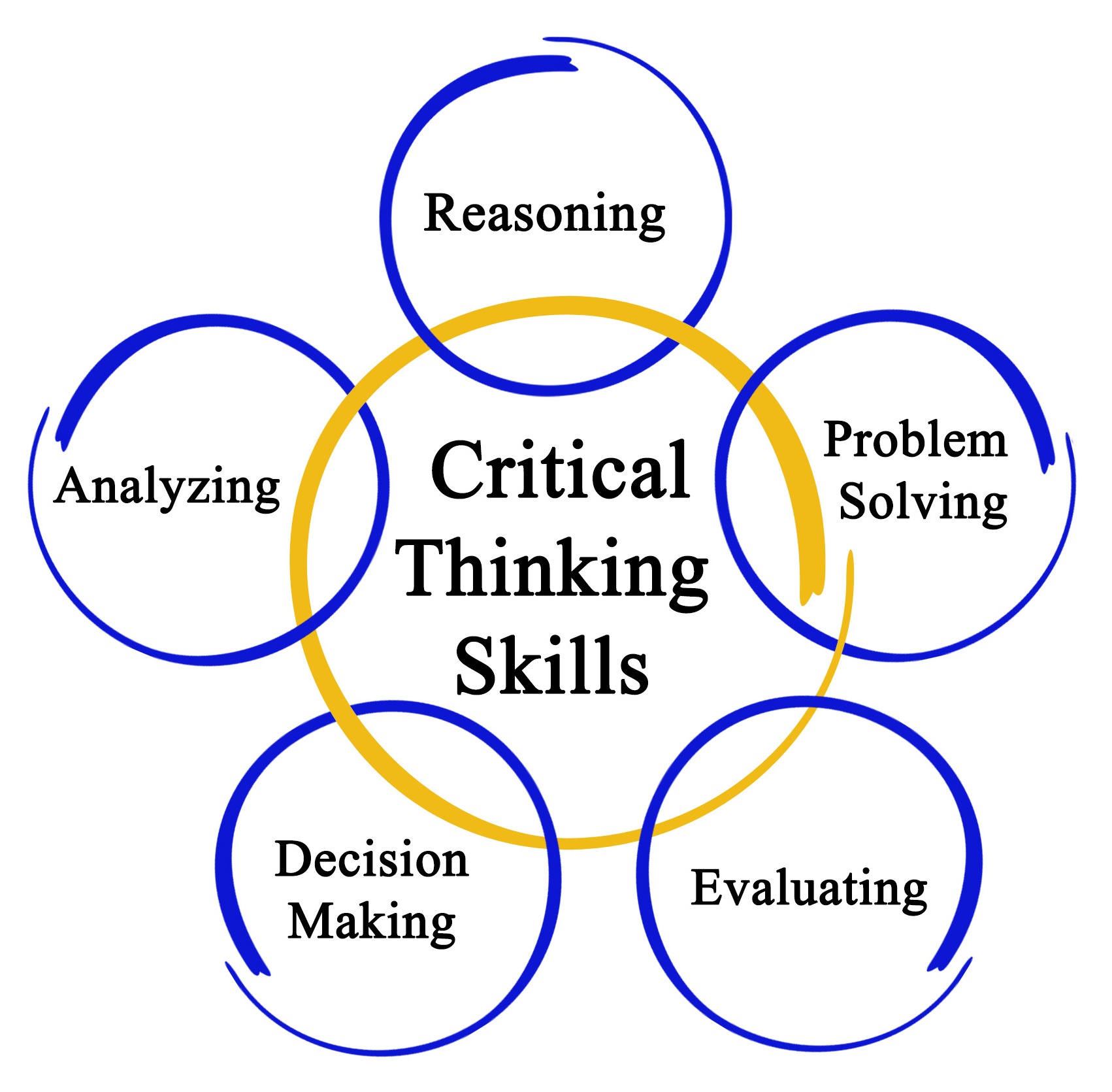
Critical Thinking Skills

If you’ve spent the last decade mastering Python, building algorithms, and perfecting your computer science fundamentals, this might be uncomfortable to read. But if you’re a business professional, consultant, or implementation specialist who understands how enterprises actually work — pay very close attention.


Something fundamental just shifted.


This week, both Anthropic and OpenAI simultaneously announced billion-dollar enterprise professional services expansions. Not more models. Not better APIs. Services. Implementation. Deployment. The hard, human work of taking AI capability and making it actually function inside real organizations with real processes and real problems.


They didn’t announce that they need more computer scientists. They announced they need people who understand business problems deeply enough to know which ones AI can solve — and how to connect the systems that run the world’s largest organizations to the models that can transform them.


That is a different skill. And right now, it is the most valuable skill in technology.


What Is Actually Happening


For the past several years, AI adoption in enterprises has followed a familiar pattern: a company buys access to an AI model, struggles to integrate it meaningfully into its operations, and either muddles through or abandons the effort. The gap between AI capability and AI deployment has been the defining problem of the enterprise AI era.


Both Anthropic and OpenAI have decided to own that gap rather than leave it to chance. Anthropic launched a new enterprise AI services company backed by Blackstone, Goldman Sachs, and Hellman & Friedman. OpenAI launched its own deployment company, raising $4 billion from 19 investors, including TPG, Brookfield, Advent, and Bain Capital.


Anthropic’s Claude Partner Network, launched with $100 million in investment, includes Deloitte, Accenture, and PwC as founding implementation partners. OpenAI is working with Accenture, Capgemini, Cognizant, Infosys, PwC, and Tata Consultancy Services to scale enterprise deployments globally.


The message is clear: the era of AI experimentation is over. Production deployment is the new battleground — and it requires human expertise to execute.


The Skill That Actually Matters


Enterprise clients are discovering that the hardest part of AI adoption isn’t the AI. It’s the integration. It’s understanding which workflow is broken, which data is siloed, which process is costing the organization time and money — and then knowing how to connect the right LLM to solve it in a way that actually sticks.


That requires business acumen. Domain knowledge. The ability to sit across from a CFO or an operations director and translate their problem into an architecture that Claude or ChatGPT can power. And then build it.


Computer science gives you the tools. But knowing which problems to solve with those tools — and how to communicate that to the humans who own the problems — is what the market is paying for right now.


The professionals who stand to benefit most share a specific profile. They understand AI in practice, not just in theory. They have built systems that run in production, handle real data, and solve real business problems. They can work across the full implementation stack, from API integration to workflow design to stakeholder communication. And critically, they can speak both technical and business language fluently.


Dual-platform fluency across both Anthropic’s Claude and OpenAI’s ChatGPT APIs is particularly valuable. Enterprise clients want platform-agnostic implementation partners, not engineers locked into a single ecosystem.


What This Means For Your Career


If you are an AI engineer, implementation specialist, or technical professional navigating your next move, the strategic implication is straightforward: position yourself as an enterprise LLM integration specialist, not a generalist AI engineer.
That means targeting Anthropic’s Claude Partner Network firms and OpenAI’s enterprise partners directly — Deloitte, Accenture, PwC, Cognizant, Infosys, and their specialized implementation partners are all actively building integration practices right now. It means leading every conversation and every application with business outcomes — the problems you solve — rather than the technology you use. And it means building your LinkedIn presence around implementation expertise, not coding skills. The people making hiring decisions at these organizations are not looking for the best programmer in the room. They are looking for the person who can walk into a Fortune 500 company and make AI actually work there.


The Broader Lesson


What Anthropic and OpenAI are doing reflects something important about where value is being created in the AI economy. The model layer is increasingly commoditized — what differentiates outcomes is implementation. The organizations and individuals who can bridge the gap between frontier AI capability and real-world enterprise deployment will define the next phase of this industry.


The professionals who position themselves correctly right now — who build the right skills, tell the right story, and target the right opportunities — have a window that will not stay open indefinitely.


The enterprise AI gold rush has officially started. The question is whether you are positioned to benefit from it.

Sources

  1. “Anthropic and OpenAI are both launching joint ventures for enterprise AI services” — TechCrunch, May 2026 https://techcrunch.com/2026/05/04/anthropic-and-openai-are-both-launching-joint-ventures-for-enterprise-ai-services/
  2. “OpenAI, Anthropic expand services push, signaling new phase in enterprise AI race” — CIO, May 2026 https://www.cio.com/article/4167787/openai-anthropic-expand-services-push-signaling-new-phase-in-enterprise-ai-race.html
  3. “Anthropic’s enterprise offering” — Anthropic official https://www.anthropic.com/product/enterprise
  4. “Anthropic’s Claude Partner Network” — Vantage Point, 2026 https://vantagepoint.io/blog/sf/anthropic/enterprise-ai-tiers-explained
  5. “OpenAI and Accenture Accelerate Enterprise Reinvention with Advanced AI” — Accenture Newsroom, December 2025 https://newsroom.accenture.com/news/2025/openai-and-accenture-accelerate-enterprise-reinvention-with-advanced-ai
  6. “Scaling Codex to enterprises worldwide” — OpenAI, May 2026 https://openai.com/index/scaling-codex-to-enterprises-worldwide

Think Critically to Seek Truth Amidst the Noise

Critical Thinking Skills
Image of brain collecting knowledge
Critical thinking skills

You have access to more information than any generation in human history. That’s not automatically an advantage. Knowing how to think about information matters more than how much of it you can access

Learn to distinguish between:

Facts vs. opinions presented as facts.

Data vs. interpretation of data.

Expertise vs. confidence (they frequently appear identical online)

Your own beliefs vs. beliefs you’ve absorbed without examination

The SIFT method for evaluating information accuracy

Stop before sharing or accepting — pause the automatic reaction

Investigate the source — who is saying this and why?

What do multiple credible sources say?

Trace claims to their origin

Not a tweet about something, but the original source

Develop intellectual humility

The smartest people you’ll ever meet hold their views loosely

They’re the ones saying “I might be wrong about this” and “tell me more.”

The people most certain they’re right are usually the ones most worth questioning.

Not a tweet about something, but the original source

Changing your mind when presented with good evidence is a strength, not a weakness.

Give Yourself Permission to Question Authority

Young men and women
current societal challenges

You have permission to

  • Disagree with authority
  • Change Direction without feeling that you failed
  • Want something unfashionable
  • Succeed when people around you haven’t

Permission to be ordinary in a culture that only celebrates the extraordinary.


You’ve been marketed the idea that you need to be exceptional. That average is failure. This is a lie that’s making a lot of people miserable.

That any less than a passion-driven, purpose-filled, Instagram-worthy life is settling. This is a lie that makes a lot of people miserable.

Quick Tips

Reframe the Problem

A well-lived life isn’t one that impressive from the outside. It’s one that feels authentic from the inside.

Give yourself permission to define success on your own terms. And then be honest about what those terms are

Gen Z Anxiety: What It’s Actually Telling You

Gen Z challenges
GenZ youn woman feeling anxious

Your generation is navigating levels of anxiety, uncertainty, and existential noise that are genuinely unprecedented.

Not because you’re weaker than previous generations — you’re not — but because the conditions are objectively more complex.

You have infinite options and zero guarantees.

You’ve watched institutions fail in real time. You’ve been handed a climate crisis, a housing affordability crisis, and a mental health crisis simultaneously. And you’re supposed to optimize your morning routine and build a personal brand.

No wonder so many of you are exhausted!

What anxiety is actually telling you

Anxiety is not a malfunction. It’s information.

It’s your nervous system flagging a gap between where you are and where you feel you need to be, or a threat — real or perceived — that requires attention.

Before you try to eliminate your anxiety, try to understand it:

  • Is this anxiety about a real, solvable problem? (Action is the answer)
  • Is this anxiety about an uncertain future I can’t control? (Acceptance and preparation are the answers)
  • Is this anxiety from comparing my chapter 2 to someone else’s chapter 20? (Perspective is the answer)
  • Is this anxiety a symptom of something deeper that needs professional support? (Therapy is the answer — and that’s not weakness, it’s strategy)

The Comparison Trap

Gen Z fomo

You are the first generation to grow up with a front-row seat to everyone else’s highlight reel, 24/7, algorithmically optimized to make you feel like you’re falling behind.

Here’s what the algorithm never shows you: the paralysis behind the polished post, the debt behind the lifestyle, the loneliness behind the follower count. Everyone performing successfully online is also privately figuring it out.

Comparison is useful exactly once: when it helps you identify what you actually want. After that, it’s just noise.

Know Yourself!

Gen Z Woman meditating
GenZ guy meditating

Most people skip this step.

They jump straight to goals, vision boards, and productivity systems — and then wonder why nothing sticks.

It doesn’t stick because the goals weren’t actually theirs.

They were borrowed from parents, algorithms, peers, or some influencer living a life that looks aspirational on screen and hollow in person.

Social media has given your generation a unique challenge.

You’ve grown up performing your identity through screens in real time, getting instant feedback on who you are and who you’re becoming.

The problem is that identity shaped by likes and validation tends to drift toward popularity.

Ask yourself:

  • What do I genuinely enjoy when no one is watching and there’s nothing to post?
  • What am I good at?
  • What issues should I watch for?
  • What topics do I read about, watch, or think about purely out of curiosity — not because they’re useful or impressive?
  • Who am I in a room full of people who have no idea who I am online?

That person — the one without the audience — is your starting point.

What Do You Value?

Most people can’t name their top five values.

They confuse values with goals (“success,” “wealth”) or morals (“be a good person”).

Values are different.

They’re the non-negotiable conditions under which you function best and feel most like yourself.

Try this: From the list below, circle every word that resonates. Then narrow to your top 10. Then your top 5. Then rank them.

Autonomy, Creativity, Security, Adventure, Connection, Achievement, Impact, Recognition, Learning, Integrity, Loyalty, Freedom, Justice, Family, Belonging, Originality, Stability, Leadership, Fun, Spirituality, Authenticity, Excellence, Service, Influence, Curiosity

Your top five are your compass. When a decision feels wrong even though it looks right on paper, it’s usually because it violates one of these. When a job, relationship, or opportunity feels right even though you can’t fully explain why, it’s usually because it aligns with them.

The Three Selves

You’re operating from three versions of yourself simultaneously, and confusing them creates enormous anxiety:

The Actual Self — who you are right now, honestly
The Ideal Self — who you genuinely want to become
The Ought Self — who you think you should be (usually someone else’s idea of you)

The gap between your actual and ideal self is motivating — it’s the engine of growth.

The gap between your actual self and your ought self is just exhausting. It produces shame and paralysis, not progress.

The work is to close the first gap and dissolve the second.