

How to Build a Life and Career That’s Actually Yours!
PRELUDE (Skip if it bums you out)

Gen Z Faces the Most Difficult Challenges since the Great Depression

You were told that hard work and the right credentials would help

Then the pandemic disrupted your education
Entry-level jobs now require 2-3 years of experience
Even if you went to college
Many are more comfortable interacting behind screens
Than in the “real world.”
Social media has people performing their perfect, curated selves
While hiding their true selves

Which is a tough standard to hold yourself to!
Civics and history classes say the US is a democracy

So you may be confused by our current society

Many young people struggle to form their own identity because they cannot afford to move out of their parents’ homes.
Entry-level roles started requiring experience you couldn’t yet have.
The cost of living made independence feel like a distant goal rather than a natural next step.
PART ONE: KNOW YOURSELF
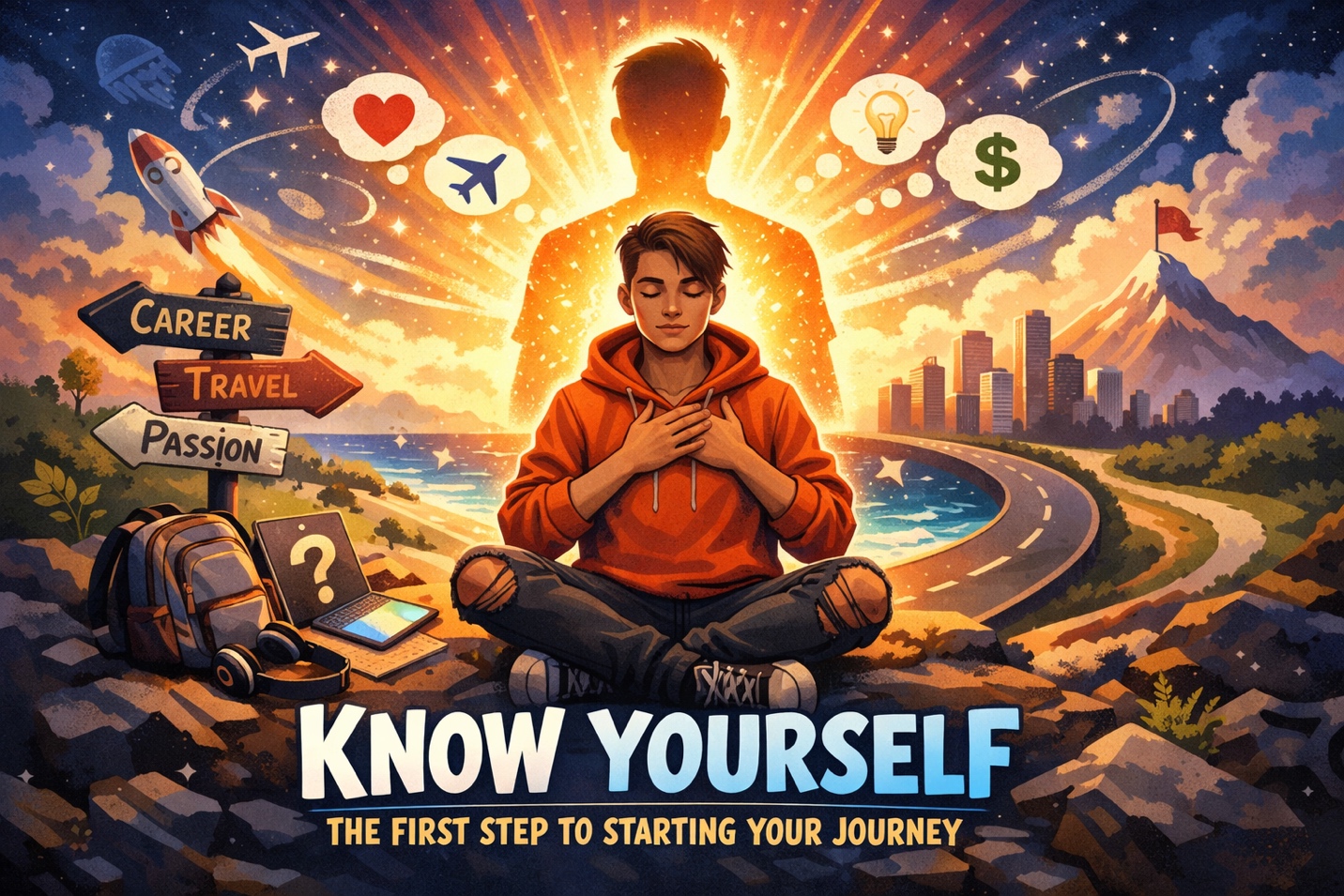
CHAPTER 1: The Identity Audit
Before you can build anything meaningful,
You need to know what you’re actually working with.
Who Are You Without the Audience?
Ask yourself:
- What do I genuinely enjoy when no one is watching and there’s nothing to post?
- What am I good at?
- What issues should I watch for?
- What topics do I read about, watch, or think about purely out of curiosity — not because they’re useful or impressive?
- Who am I in a room full of people who have no idea who I am online?
That person — the one without the audience — is your starting point.
The Values Exercise
Most people can’t name their top five values.
They confuse values with goals (“success,” “wealth”) or morals (“be a good person”).
Values are different. They’re the non-negotiable conditions under which you function best and feel most like yourself.
Try this:
From the list below, circle every word that resonates. Then narrow to your top 10. Then your top 5. Then rank them.
Autonomy, Creativity, Security, Adventure, Connection, Achievement, Impact, Recognition, Learning, Integrity, Loyalty, Freedom, Justice, Family, Belonging, Originality, Stability, Leadership, Fun, Spirituality, Authenticity, Excellence, Service, Influence, Curiosity
Your top five are your compass
When a decision feels wrong even though it looks right on paper, it’s usually because it violates one of these.
When a job, relationship, or opportunity feels exactly right, it’s usually because it aligns with your values
The Three Selves
You’re operating from three versions of yourself simultaneously, and confusing them creates enormous anxiety:
The Actual Self — who you are right now, honestly
The Ideal Self — who you genuinely want to become
The Ought Self — who you think you should be (usually someone else’s idea of you)

CHAPTER 2: The Anxiety You’re Not Talking About
Your generation is navigating levels of anxiety, uncertainty, and existential noise that are genuinely unprecedented.
Not because you’re weaker than previous generation
You’re not!
But because the conditions are more complex.
You have infinite options and zero guarantees.
You’ve watched institutions fail in real time.
And you’re supposed to “optimize” your experience
You’ve Been Handed a
Climate crisis
Housing affordability crisis
And a mental health crisis simultaneously.
And you’re supposed to build your life, career, and personal brand
No wonder so many of you are exhausted!!
What anxiety is actually telling you
Anxiety is not a malfunction.
It’s information.
It’s your nervous system flagging a gap between where you are and where you feel you need to be
Or a threat — real or perceived — that requires attention.
Before you try to eliminate your anxiety,
Try to understand it:
- Is this anxiety about a real, solvable problem? (Action is the answer)
- Is this anxiety about an uncertain future I can’t control? (Acceptance and preparation are the answers)
- Is this anxiety from comparing my chapter 2 to someone else’s chapter 20? (Perspective is the answer)
- Is this anxiety a symptom of something deeper that needs professional support? (Therapy is the answer — and that’s not weakness, it’s strategy)
The Comparison Trap
Comparison is useful exactly once: when it helps you identify what you actually want. After that, it’s just noise.
You are the first generation to grow up with a front-row seat to everyone else’s highlight reel, 24/7
Algorithmically optimized to make you feel like you’re falling behind.
Here’s what the algorithm never shows you:
The paralysis behind the polished post
The debt behind the lifestyle
The loneliness behind the follower count
Everyone performing successfully online is also privately figuring it out!

It’s a tough standard to hold oneself to

Chapter 3: Give Yourself Permission
You Have The Permission To
Disagree with authority.
Change direction without feeling you failed
Want something unfashionable.
Succeed when people around you haven’t.
Permission to be ordinary in a culture that only celebrates the extraordinary.
You’ve been marketed the idea that you need to be exceptional
That average is failure
That anything less than a passion-driven, purpose-filled, Instagram-worthy life is settling.
– This is a lie that’s making a lot of people miserable.
Reframe
A life well-lived isn’t one that looks impressive from the outside.
It’s one that feels meaningful from the inside.
Those things sometimes overlap.
Often they don’t.
Give yourself permission to define success on your own terms
And then be honest about what those terms actually are.
PART TWO: Build Your Brain
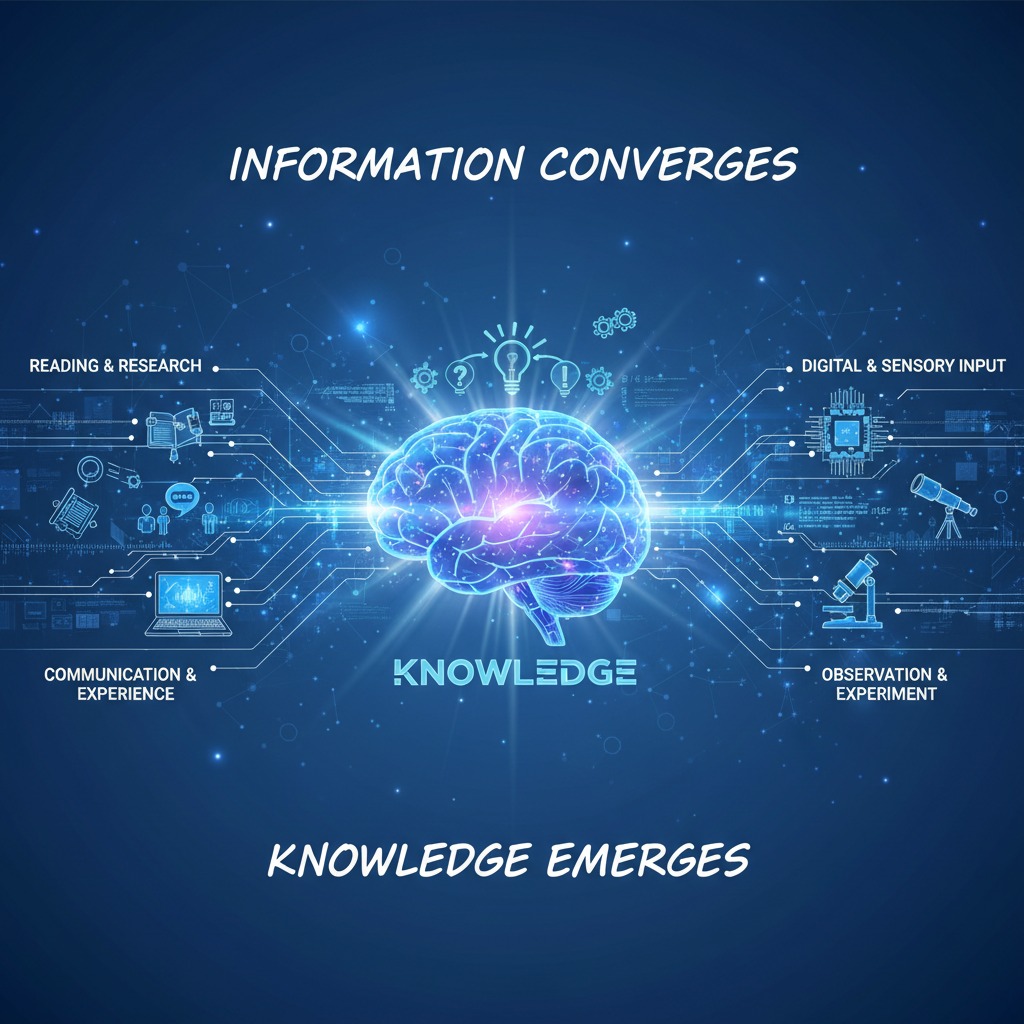
CHAPTER 4: Critical Thinking in the Age of Everything
You have access to more information than any generation in human history.
That’s not automatically an advantage.
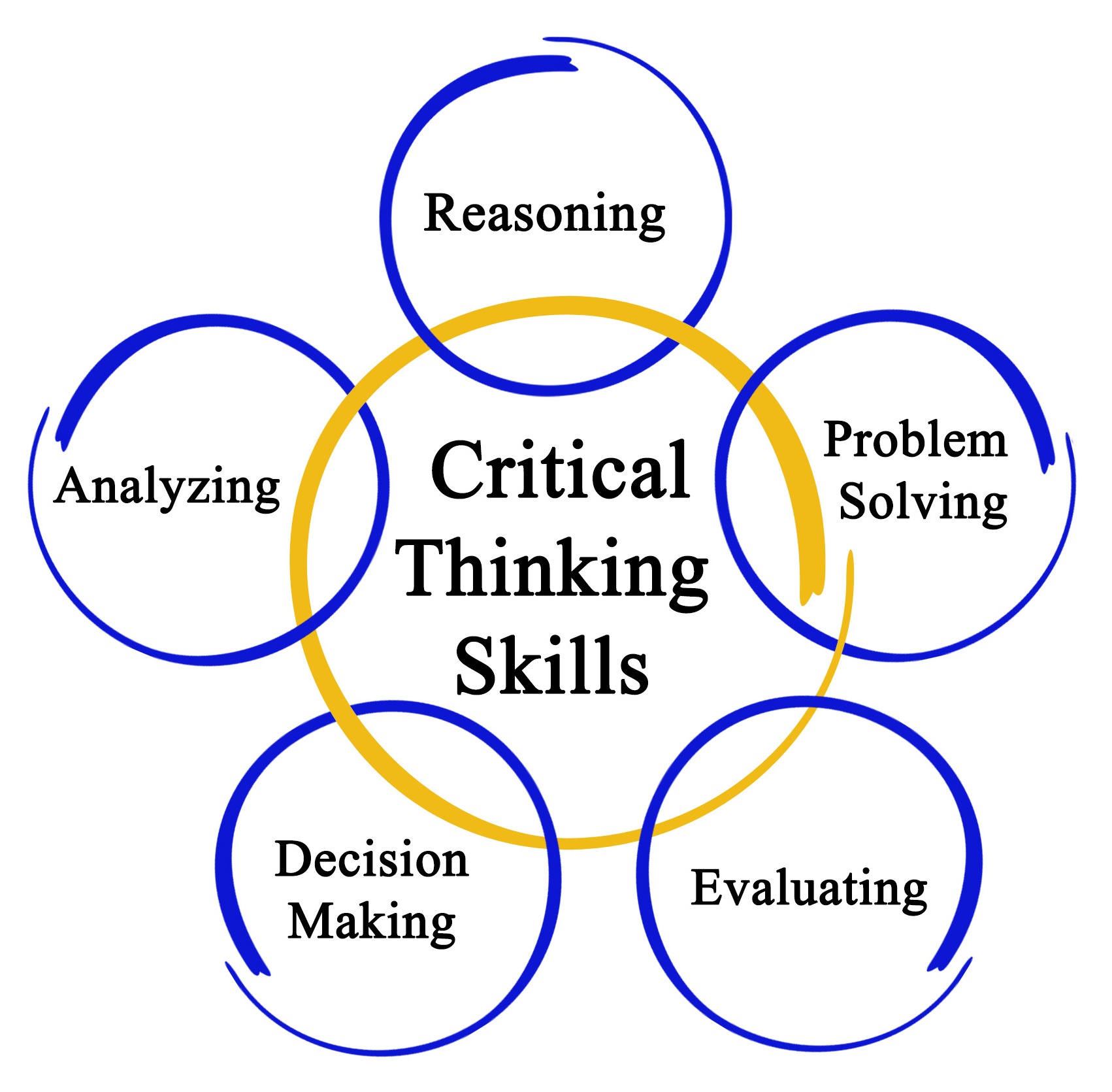
Knowing how to think about information matters more than how much of it you can access
Learn to distinguish between
- Facts vs. opinions presented as facts
- Data vs. interpretation of data
- Expertise vs. confidence (they frequently appear identical online)
- Your own beliefs vs. beliefs you’ve absorbed without examination
The SIFT method for evaluating information accuracy
- Stop before sharing or accepting — pause the automatic reaction
- Investigate the source — who is saying this and why?
- What do multiple credible sources say?
- Trace claims to their origin
- Not a tweet about something, but the original source
Develop intellectual humility
- The smartest people you’ll ever meet hold their views loosely
- They’re the ones saying “I might be wrong about this” and “tell me more.”
- The people most certain they’re right are usually the ones most worth questioning.
- Not a tweet about something, but the original source
- Being willing to change your mind when presented with good evidence is a strength, not a weakness.

CHAPTER 5: Emotional Intelligence Is Your Superpower
IQ gets you in the room. EQ determines what happens when you’re there.
EQ, the ability to recognize, understand, and manage your emotions and read others’ emotions accurately, is consistently rated as the most important leadership skill by executives and hiring managers
And it’s genuinely learnable.
The Four Components
Self-awareness
Sensitivity to self and others
Cognition
The ability to think before you respond.
Using critical thinking skills
Empathy
Genuinely try to understand another person’s experience before evaluating it.
Social Skills
Navigating shared spaces and conflict
Influencing without manipulation
Building trust over time.
These are learnable behaviors
Not fixed personality traits

CHAPTER 6: Deep Work in a Distracted World
Your attention is the most valuable thing you own
And an entire industry is designed to steal it.
The ability to focus deeply on hard things for sustained periods of time is difficult.
But Extremely Important
Those who develop the ability to concentrate
Will achieve their goals more quickly
Some practical tips

Track your phone usage honestly for one week
See what was useful and what makes you feel worse
Leave your phone out of your bedroom
Your last and first thoughts of the day should NOT belong to an algorithm
Time-Blocking:
Schedule deep work the way you’d schedule a meeting
Protect it.

PART THREE: BUILD YOUR LIFE
CHAPTER 7: Relationships Are Infrastructure

Your relationships are not a reward for getting everything else right. They’re foundational.
The quality of your relationships determines the quality of your life.
Everything else — income, achievements, prestige — matters far less than most people assume.
The Relationship Audit
Look honestly at your current relationships and ask:
- Who energizes me? Who depletes me?
- Who tells me the truth? Who only tells me what I want to hear?
- Who is growing? Who is stagnant — and pulling me toward stagnation?
- Who do I show up fully for? Who do I perform for?
You don’t need a dramatic culling
You need awareness
Invest more in relationships that nourish and challenge you.
And less in those that consistently drain you.
On Loneliness

Gen Z is the loneliest generation on record, despite being the most connected digitally.
This is not a paradox — it’s a consequence.
Digital connection satisfies the surface need for interaction while leaving the deeper need for genuine intimacy unmet.
Real connection requires: time, vulnerability, consistency, and the willingness to be truly known — not just liked. It’s uncomfortable. It’s also non-negotiable for a flourishing life.
If you’re lonely, it’s not because you’re unlovable or socially broken.
It’s because the conditions for real connection require deliberate effort in an environment designed for superficial engagement.
Create those conditions intentionally.
On Romantic Relationships

The healthiest romantic relationships aren’t the ones that complete you
They’re the ones that accompany you.
Two whole people choosing each other, not two incomplete people depending on each other.
Know your attachment style. Understand your patterns.
Don’t outsource your emotional regulation to a partner.
Bring your full self to relationships rather than the version of yourself you think is most lovable.

CHAPTER 8: Take Care of Your Body. It’s the Only One You’ll Ever Get
You cannot think clearly, feel well, create effectively, or sustain relationships from a depleted physical foundation. Sleep, movement, and nutrition aren’t wellness trends — they’re operating requirements.
Sleep: Non-negotiable. Chronic sleep deprivation impairs cognition, emotional regulation, and decision-making at levels equivalent to alcohol impairment. The research on this is overwhelming. Protect 7-9 hours like your performance depends on it — because it does.
Movement: You don’t need a complex fitness identity. You need to move your body regularly in ways that feel good. Walk more. The research on walking specifically — for mood, creativity, and cognitive function — is striking. A 20-minute walk is a legitimate mental health intervention.
Nutrition: Not a diet. Just a reduction in ultra-processed foods and an increase in things that grew somewhere. Your gut microbiome directly affects your brain chemistry. What you eat affects how you think and feel with a specificity that most people don’t appreciate until they change it.
Substances: Be honest with yourself. Gen Z’s relationship with alcohol is actually healthier than previous generations — more of you are drinking less, which is genuinely good. But cannabis, in particular, is worth examining honestly. Regular use and ambition have a complicated relationship. So does regular use and anxiety, for many people. Be curious about your own patterns.
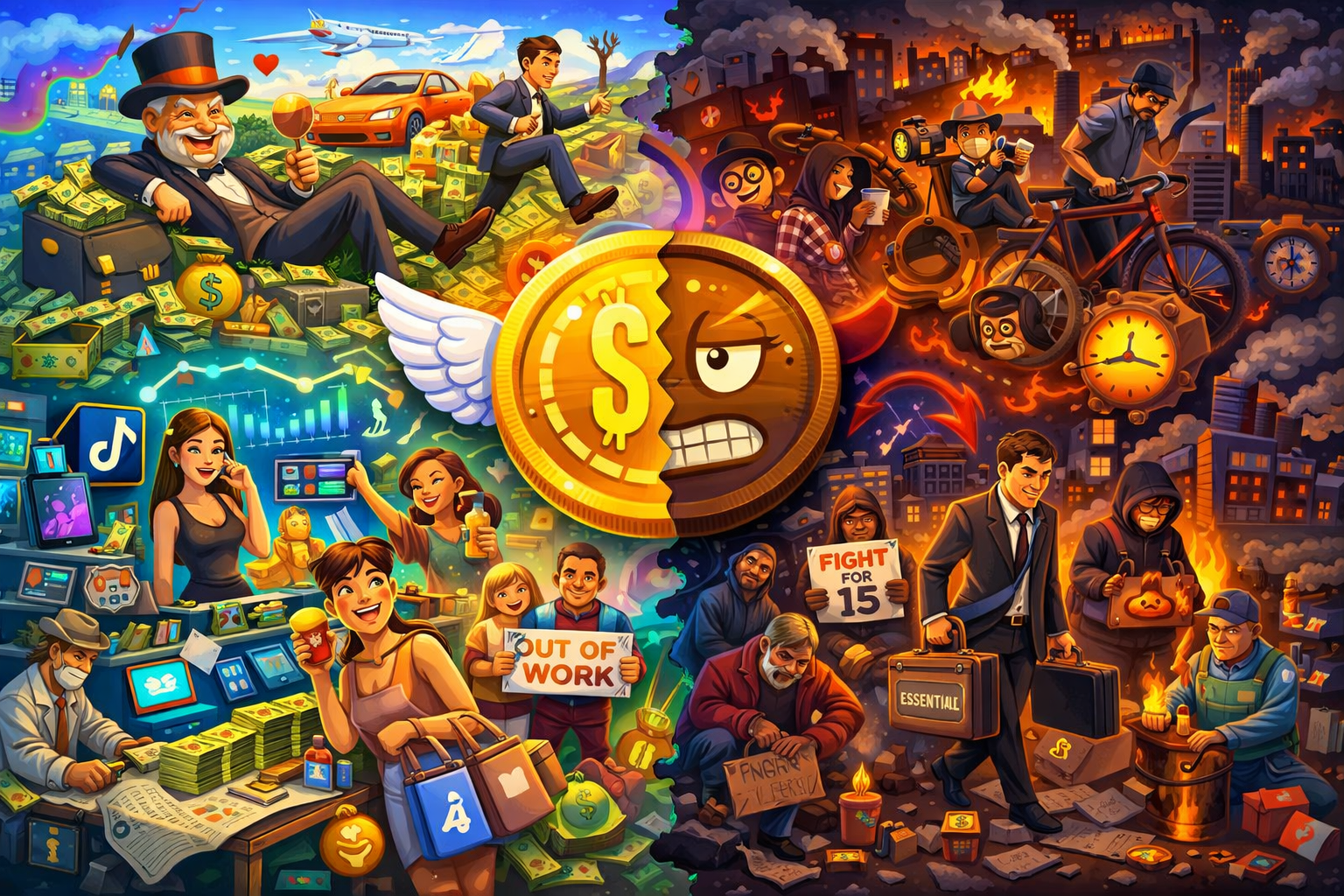
CHAPTER 9: Money — The Conversation Nobody Had With You
Financial literacy is essentially absent from most educational systems, which is criminal given how directly it affects the quality of your life and options. Here’s the foundation:
Spend less than you earn. This sounds obvious. Most people don’t do it. The gap between what you earn and what you spend is the single most important financial variable in your life, and it’s largely within your control — even on a modest income.
Understand the difference between assets and liabilities. Assets put money in your pocket (investments, skills, side income). Liabilities take money out (debt, depreciating purchases). Slowly shift the ratio toward assets.
Compound interest works both ways. It builds wealth in your investments and buries you in debt. Time is your greatest financial asset right now. A small amount invested consistently in your 20s becomes something genuinely significant by your 40s.
Emergency fund first. Before investing, before lifestyle upgrades — three to six months of expenses in a savings account you don’t touch. This single thing changes your relationship with risk and decision-making in ways that are hard to overstate.
On lifestyle inflation: Every time your income goes up, resist the immediate pressure to upgrade your lifestyle proportionally. The people who build financial security aren’t necessarily the ones who earn the most — they’re the ones who widen the gap between earning and spending as their income grows.
On debt: Not all debt is equal. High-interest consumer debt is a wealth destroyer. Student loan debt requires honest assessment — does the credential you’re paying for actually increase your earning potential proportionally? Sometimes yes. Sometimes no. Know the answer before you sign.
PART FOUR: BUILD YOUR CAREER

CHAPTER 10: The Career Myth You Were Sold
You were told to find your passion and follow it.
This advice, while well-intentioned, has caused enormous confusion and anxiety.
For most people, passion follows mastery — not the other way around.
You become passionate about things you get genuinely good at, because competence is intrinsically rewarding.
Waiting to discover your passion before committing to developing skills puts the cart before the horse.
A Better Framework:
Instead of asking “what am I passionate about?” ask:
- What problems do I find genuinely interesting to solve?
- What work have I lost track of time doing?
- What would I be willing to be bad at for a year if I could eventually be good at?
- What needs exist in the world that I’m positioned — or could be positioned — to meet?
The Intersection Model
The most satisfying careers tend to be at the intersection of:
- What you’re good at (or can become good at)
- What the world needs and will pay for
- What you find meaningful or interesting
You don’t need to find a job that maximizes all three at once
You need to understand where you are now and which direction to move in.
CHAPTER 11: Skills Over Titles
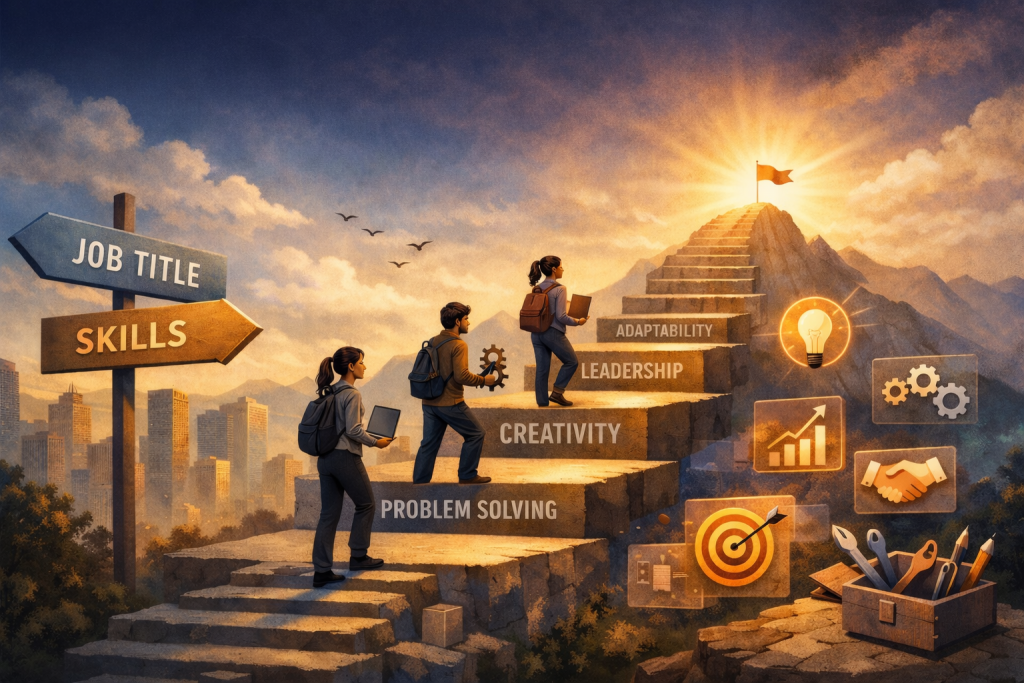
The economy your generation is entering rewards demonstrable skills more than credentials, titles, or institutional affiliations — more than any previous generation’s economy did.
This is both unsettling and genuinely liberating.
The T-shaped professional: Develop broad, working knowledge across multiple adjacent domains (the horizontal bar of the T) and deep expertise in one or two specific areas (the vertical bar). This combination — generalist breadth plus specialist depth — is increasingly rare and valuable.
Hard skills vs. soft skills:
The terminology is misleading.
Soft skills, such as communication, critical thinking, emotional intelligence, and leadership, are often the hardest to develop
Yet the most valuable professionally.
Technical skills are increasingly learnable through self-directed study.
The combination is unstoppable.
Skills worth developing regardless of industry:
- Clear written communication (writing is thinking made visible)
- Public speaking and presentation
- Data literacy — the ability to read, interpret, and communicate with data
- Project management — delivering on commitments, on time
- Negotiation and persuasion
- Systems thinking — understanding how parts interact within wholes
On AI and your career
AI is not going to replace humans who can think critically, communicate clearly, lead with empathy, and solve ambiguous problems.
It will replace humans doing routine, predictable, rule-based tasks.
The answer isn’t to avoid AI — it’s to develop the human capabilities that complement it.
Learn to use AI tools fluently while doubling down on distinctly human skills. (More on AI in Chapter 16)
CHAPTER 13: How to Actually Get a Job

The application process is the least effective way to get a job.
The majority of roles are filled through networks before they’re ever posted publicly.
This doesn’t mean the system is corrupt — it means relationships matter, and always have.
Build your network before you need it.
A network built in desperation feels transactional and performs poorly.
A network built through genuine curiosity and mutual value creation is something entirely different.
Reach out to people doing work you find interesting — not to ask for jobs, but to learn from them.
Ask thoughtful questions. Follow up. Be memorable for reasons other than neediness.
LinkedIn is not optional anymore.
A strong LinkedIn profile is a 24/7 representative of your professional identity.
It’s where people who want to hire you will go to assess whether you’re who you say you are. Invest time in making it reflect your best, most authentic professional self.
The informational interview.
One of the most underused tools available to you.
Ask someone doing work you’re interested in for 20-30 minutes of their time to learn about their path.
Most people will say yes.
Come prepared with real questions.
Follow up with a thank-you.
This single habit has launched more careers than any application process.
Your online presence is your portfolio.
What you create and put into the world — writing, projects, analyses, creative work, public contributions — demonstrates capability more convincingly than any resume.
Start creating things.
Put them somewhere findable.
On rejection
Rejection is data, not a verdict.
It tells you something about fit, timing, positioning, or presentation — not your fundamental worth or potential.
The people who build strong careers aren’t the ones who never get rejected.
They’re the ones who treat rejection as information and keep moving.

CHAPTER 14: Navigating the Workplace as a Gen Z Professional
How to navigate work without sabotaging yourself.
You’ll sometimes feel like the systems, norms, and expectations don’t fit the way you work or the values you hold.
Success is more likely to come to those who present themselves authentically
Establish your credibility
Demonstrate competence, reliability, and good judgment first
Then your perspective on what should change carries real weight.
Document Your Impact
And you earn the right to challenge the system
Keep a running record of your contributions, achievements, and positive feedback.
Many people discover they can’t remember what they accomplished when it’s time for a performance review.
Your advocates need ammunition, and you need to provide it.
On generational tension
Some older colleagues will hold stereotyped assumptions about your generation
No need to be angry or defensive
Just prove them wrong!

CHAPTER 15: The Portfolio Career
Linear career paths are increasingly rare and increasingly unnecessary.
Many of the most interesting careers today span multiple disciplines, industries, and types of work
Your comfort with digital tools, ability to learn quickly, and comfort with iteration give you advantages in non-linear careers that previous generations didn’t have.
Skills transfer from one job to the next
Side projects are legitimate credentials
Build something on your own
a newsletter
a community
an app
a body of creative work
Such work demonstrates initiative, skills, and follow-up
More than almost everything else on your resume
On frequent job changes
The old stigma surrounding them has largely dissolved.
Staying for two to three years, delivering real impact, and moving to the next challenge is a legitimate and often smart career strategy.
That said, a pattern of leaving before you’ve delivered anything substantive will eventually become visible and raise questions.
Chapter 16: Artificial Intelligence

I’ve spent years studying the impact of AI on our personal and professional lives, including both positive and negative impacts for Gen Z
The fear is real. Let’s start there.

- You’ve watched AI write essays, generate images, pass bar exams, and code entire applications in seconds
- You’ve read the headlines: millions of jobs at risk, entire industries disrupted, white-collar work no longer safe
- Some of your classmates are already using it to do work they’re getting paid or graded for — and it’s working
- You’re wondering if the skills you’re building, the degree you’re paying for, or the career you’re planning will matter in five years
- That’s not paranoia. That’s a reasonable response to something genuinely disruptive
What I won’t tell you
- AI is just a tool like a calculator, and everything will be fine
- Not to worry about it
- Pretend the disruption isn’t real or that nobody is going to lose work over this
- Give you a list of “AI-proof careers” that some career blogger made up six months ago
Here’s what’s actually true:
- AI is already replacing tasks — not just jobs, but specific tasks within jobs
- Data entry, basic copywriting, routine coding, simple legal and financial research, customer service scripts — these are being automated now, not eventually
- The workers most at risk are not low-skill workers. They’re mid-skill workers doing predictable, rule-based cognitive tasks
- The gap between people who know how to use AI effectively and those who don’t is widening — and it will keep widening
- The companies and individuals who learn to work with AI will have significant advantages over those who don’t
- AI is already replacing tasks — not just jobs, but specific tasks within jobs
- Data entry, basic copywriting, routine coding, simple legal and financial research, customer service scripts — these are being automated now, not eventually
- The workers most at risk are not low-skill workers. They’re mid-skill workers doing predictable, rule-based cognitive tasks
- The gap between people who know how to use AI effectively and those who don’t is widening — and it will keep widening
- The companies and individuals who learn to work with AI will have significant advantages over those who don’t
Misinformation at Massive Scale
- AI can generate convincing text, realistic images, and fake video at a volume and quality no human operation could match
- The information environment you already found difficult to navigate is going to get significantly harder
- Deepfakes, AI-generated news, synthetic social media accounts — these aren’t future problems
- The SIFT method from Chapter 4 is no longer optional. It’s survival!
The Wealth Gap
- The people and companies best positioned to benefit from AI are already wealthy
- Access to the best AI tools, training, and infrastructure follows money
- There is a real risk that AI accelerates inequality rather than reducing it
- This is a legitimate concern and a political and economic challenge your generation will have to grapple with
Privacy and Surveillance
- AI dramatically improves the ability to track, profile, and predict human behavior
- Your data — what you buy, where you go, what you search, who you talk to — is increasingly being used to train systems that make decisions about you
- Insurance, hiring, credit, and law enforcement are already using AI-driven assessments, often without transparency
- Know what you’re agreeing to when you use it
Authenticity and Connection
- When AI can generate any piece of content on demand, genuine human creativity and real relationships become more valuable, not less
- The question “did a human actually make this?” is going to matter more going forward
- Your ability to build real trust with real people is not something AI can replicate

Why You Should Embrace AI
- AI tools are not cheating. They’re leverage
- The professionals who are thriving right now are using AI to do in one hour what used to take a day — and spending the remaining time on higher-value thinking
- Not knowing how to use these tools is like refusing to learn to type because you prefer handwriting. Possible. Increasingly costly.
- Start with the tools that are already relevant to your field or interests: writing, research, coding, design, data analysis
The Bottom Line
- AI is not going away. It’s going to get more capable, more embedded, and more consequential
- You can be afraid of it, resentful of it, or confused by it — or you can understand it well enough to use it strategically while protecting the things it can’t touch
- Your values, your judgment, your relationships, your creativity, and your ability to keep learning — those aren’t replaceable
- The goal isn’t to compete with AI. It’s to be the person who knows how to embrace it, question it, and do the things it can’t
- The question isn’t whether AI will affect your career. It will.
- The question isn’t whether AI will affect your career. It will.
- The question is whether you’re going to engage with that reality clearly and strategically, or wait for it to happen to you
- You need to make yourself harder to automate, starting now
Some Tips for Using AI
Use AI as a thinking partner, not a replacement for thinking:
The people getting the most value from AI are using it to pressure-test their ideas, not replace them
- Ask it to argue against your plan. Ask it to find the weaknesses in your reasoning. Ask it to explain something five different ways until one clicks
- Use it to learn faster — not to avoid learning
- The professionals who will have credibility in an AI-saturated world are the ones who are honest about their process
- “I used AI to draft this and then rewrote it significantly” is a legitimate and increasingly common workflow
- “I had AI write this and submitted it as my own original thinking” is a form of fraud — and one that’s increasingly detectable
- Pay attention to who owns the tools you use
- The platforms you use for work, learning, and income are owned by companies with their own interests
- Diversify your skills across tools rather than becoming dependent on any single platform
Be transparent about how you use it
- The professionals who will have credibility in an AI-saturated world are the ones who are honest about their process
- “I used AI to draft this and then rewrote it significantly” is a legitimate and increasingly common workflow
- “I had AI write this and submitted it as my own original thinking” is a form of fraud — and one that’s increasingly detectable
Pay attention to who owns the tools you depend on
- The platforms you use for work, learning, and income are owned by companies with their own interests
- Diversify your skills across tools rather than becoming dependent on any single platform
OR Choose a Vocational Career

And there’s nothing wrong with that!
Unions leverage collective bargaining to negotiate for
Higher Wages
Health Benefits
Pensions
PART FIVE: PUTTING IT ALL TOGETHER

The Integration
CHAPTER 17: Goal-Setting That Actually Works
Most goal-setting fails because it skips the foundational work.
If you’ve done the values and identity work in Part One, you’re ready for this.

The Three Levels of Goals
Life goals — Who do you want to be? What do you want your life to stand for? What do you want to have built, contributed, or experienced over a lifetime? These are rarely fully answered, but they give direction.
Annual goals — What are the 3-5 most important things to accomplish this year that would move you meaningfully toward your life goals? No more than five. More than that, and you have preferences, not goals.
Weekly priorities — Every Sunday, identify the three most important things to move forward this week. Three. If you do nothing else, do these three things.
Make goals specific, time-bound, and honest.
Not “get healthier” but “run three times a week for the next 90 days.
Not “improve my career” but “complete this specific certification and have three informational interviews by December 1st.”
Review regularly. Goals you don’t revisit become wishful thinking. A brief monthly review — what’s working, what isn’t, what needs to change — keeps you honest and adaptive.
On failure and pivoting: Changing a goal because your values or circumstances have changed is not failure.
Changing a goal just because it is hard is something worth examining. Know the difference.
CHAPTER 18: Building Habits That Stick
Your life is essentially the sum of your habits — the small, repeated behaviors that compound over time into outcomes. This sounds reductive, and it’s also true.
The Habit Loop
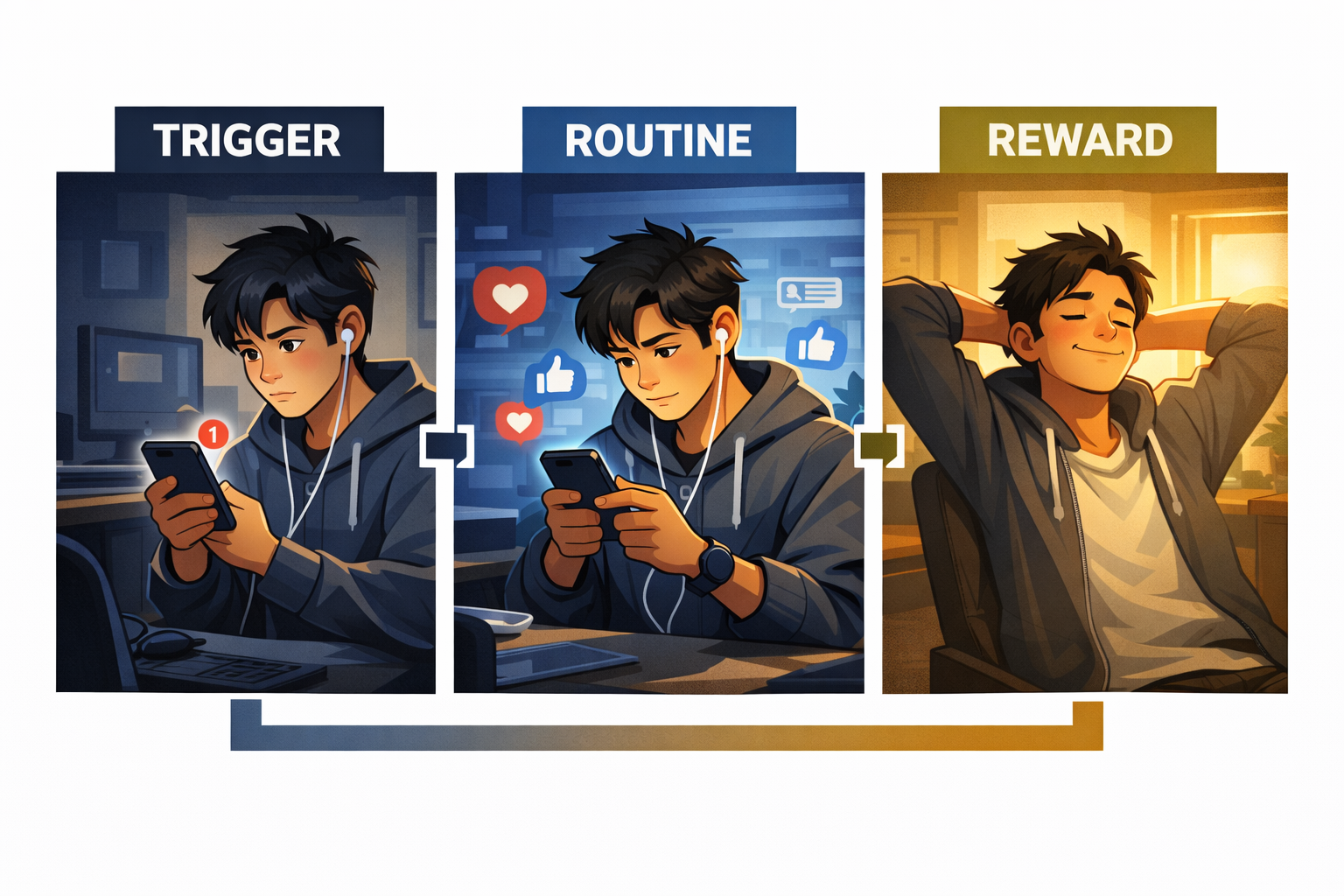
Every habit has a cue (trigger), a routine (the behavior), and a reward (what you get from it).
To build new habits, design the cue and make the reward immediate.
To break habits, disrupt the cue, or remove the reward.
Start Small
The biggest mistake in habit building is starting too ambitiously.
“I’ll meditate for 20 minutes every morning” fails.
“I’ll take three conscious breaths before I open my phone each morning” succeeds — and builds from there.
James Clear’s two-minute rule
Start any new habit with a version that takes two minutes or less.
Environmental design matters more than willpower.
Make good behaviors easy and bad behaviors harder.
Want to eat better? Don’t buy the food you’re trying to avoid.
Want to read more? Put the book on your pillow.
Want to exercise more? Sleep in your workout clothes.
The environment you design determines the choices that you make more reliably than motivation ever will.
Identity-based habits.
The most durable habit change happens when you shift identity, not just behavior.
Not “I’m trying to exercise more” but “I’m someone who moves my body every day.”
Not “I’m trying to stop smoking” but “I don’t smoke.”
Small shift. Enormous difference in persistence.

CHAPTER 19: Resilience
Life will be harder than you expect in ways you can’t predict. This is not pessimism — it’s preparation.
Resilience is not the absence of struggle. It’s the ability to move through struggle without being permanently defined by it. And like every other skill in this guide, it’s developable.
What the research says builds resilience:
- A sense of meaning and purpose — knowing why you’re going through something changes how you experience it
- Strong social connections — people with robust support networks recover from setbacks faster and more completely
- A growth mindset — the belief that challenges develop capability rather than reveal fixed limitations
- Self-compassion — treating yourself with the kindness you’d offer a friend who was struggling
- Action orientation — focusing on what you can control rather than ruminating on what you can’t
On failure: Every significant life accomplishment involves failure — usually multiple times, at a significant scale. The people who achieve things aren’t the ones who didn’t fail. They’re the ones who failed and kept going. Normalize failure as part of the process, not evidence of the wrong path.
On asking for help: Needing support is not a weakness. Refusing it is. The most resilient people build networks of support intentionally and use them without shame.

CHAPTER 20: A Final Word on Authenticity
Authenticity is probably the most overused word in your generation’s vocabulary and, at the same time, one of the most important concepts to understand correctly.
Authenticity doesn’t mean sharing everything, having no filter, or staying exactly as you are forever.
It means that your external presentation — who you say you are, what you stand for, how you show up — is genuinely aligned with your internal experience and values.
You’re allowed to grow.
You’re allowed to change your mind.
You’re allowed to be a work in progress, publicly.
In fact, the people who pretend they have it figured out are almost always the least trustworthy ones in the room.
The most magnetic, effective, and genuinely successful people you’ll encounter share one quality: they’re comfortable being exactly who they are, including the parts they’re still developing.
They’re NOT performing with confidence — they actually have it — because it’s grounded in self-knowledge rather than external validation.
That’s the work. Not becoming someone else’s idea of impressive. Becoming the fullest, most honest, most capable version of yourself.
Everything in this guide is in service of that.
This guide is a starting point, not a prescription.
Take what’s useful.
Leave what isn’t.
Come back to different chapters as your circumstances change.
And remember — the goal isn’t a perfect life. It’s an honest, growing, genuine life that is yours