Think Critically to Seek Truth Amidst the Noise

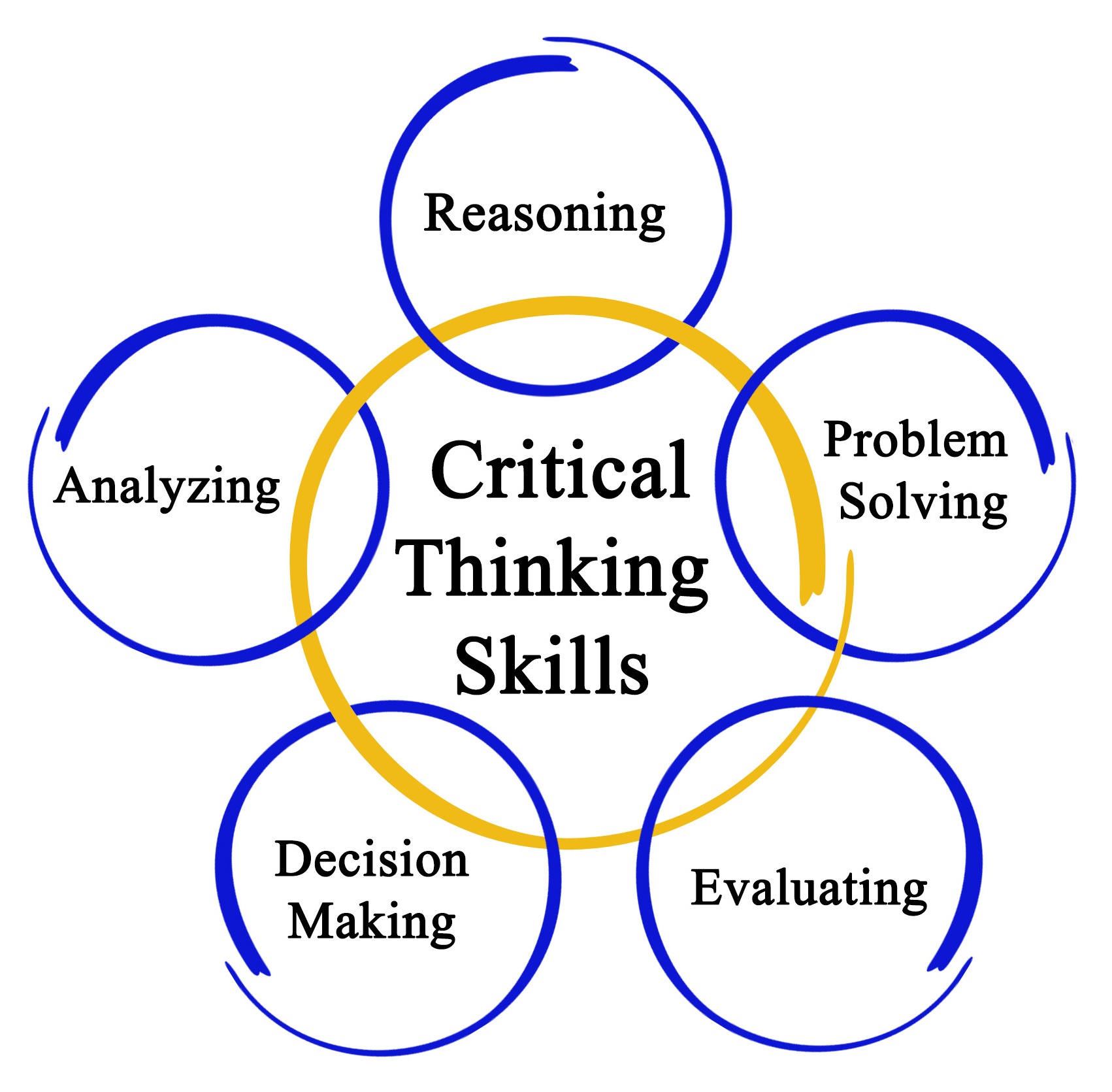
Critical Thinking Skills
Image of brain collecting knowledge
Critical thinking skills

You have access to more information than any generation in human history. That’s not automatically an advantage. Knowing how to think about information matters more than how much of it you can access

Learn to distinguish between:

Facts vs. opinions presented as facts.

Data vs. interpretation of data.

Expertise vs. confidence (they frequently appear identical online)

Your own beliefs vs. beliefs you’ve absorbed without examination

The SIFT method for evaluating information accuracy

Stop before sharing or accepting — pause the automatic reaction

Investigate the source — who is saying this and why?

What do multiple credible sources say?

Trace claims to their origin

Not a tweet about something, but the original source

Develop intellectual humility

The smartest people you’ll ever meet hold their views loosely

They’re the ones saying “I might be wrong about this” and “tell me more.”

The people most certain they’re right are usually the ones most worth questioning.

Not a tweet about something, but the original source

Changing your mind when presented with good evidence is a strength, not a weakness.

Give Yourself Permission to Question Authority

Young men and women
current societal challenges

You have permission to

  • Disagree with authority
  • Change Direction without feeling that you failed
  • Want something unfashionable
  • Succeed when people around you haven’t

Permission to be ordinary in a culture that only celebrates the extraordinary.


You’ve been marketed the idea that you need to be exceptional. That average is failure. This is a lie that’s making a lot of people miserable.

That any less than a passion-driven, purpose-filled, Instagram-worthy life is settling. This is a lie that makes a lot of people miserable.

Quick Tips

Reframe the Problem

A well-lived life isn’t one that impressive from the outside. It’s one that feels authentic from the inside.

Give yourself permission to define success on your own terms. And then be honest about what those terms are

Gen Z Anxiety: What It’s Actually Telling You

Gen Z challenges
GenZ youn woman feeling anxious

Your generation is navigating levels of anxiety, uncertainty, and existential noise that are genuinely unprecedented.

Not because you’re weaker than previous generations — you’re not — but because the conditions are objectively more complex.

You have infinite options and zero guarantees.

You’ve watched institutions fail in real time. You’ve been handed a climate crisis, a housing affordability crisis, and a mental health crisis simultaneously. And you’re supposed to optimize your morning routine and build a personal brand.

No wonder so many of you are exhausted!

What anxiety is actually telling you

Anxiety is not a malfunction. It’s information.

It’s your nervous system flagging a gap between where you are and where you feel you need to be, or a threat — real or perceived — that requires attention.

Before you try to eliminate your anxiety, try to understand it:

  • Is this anxiety about a real, solvable problem? (Action is the answer)
  • Is this anxiety about an uncertain future I can’t control? (Acceptance and preparation are the answers)
  • Is this anxiety from comparing my chapter 2 to someone else’s chapter 20? (Perspective is the answer)
  • Is this anxiety a symptom of something deeper that needs professional support? (Therapy is the answer — and that’s not weakness, it’s strategy)

The Comparison Trap

Gen Z fomo

You are the first generation to grow up with a front-row seat to everyone else’s highlight reel, 24/7, algorithmically optimized to make you feel like you’re falling behind.

Here’s what the algorithm never shows you: the paralysis behind the polished post, the debt behind the lifestyle, the loneliness behind the follower count. Everyone performing successfully online is also privately figuring it out.

Comparison is useful exactly once: when it helps you identify what you actually want. After that, it’s just noise.

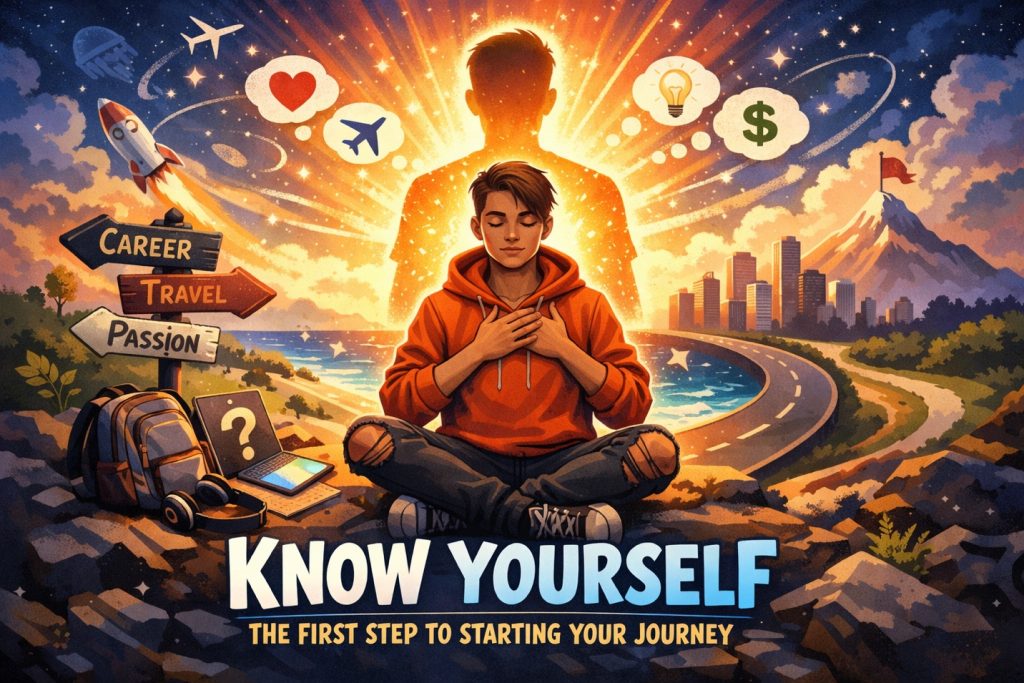
Know Yourself!

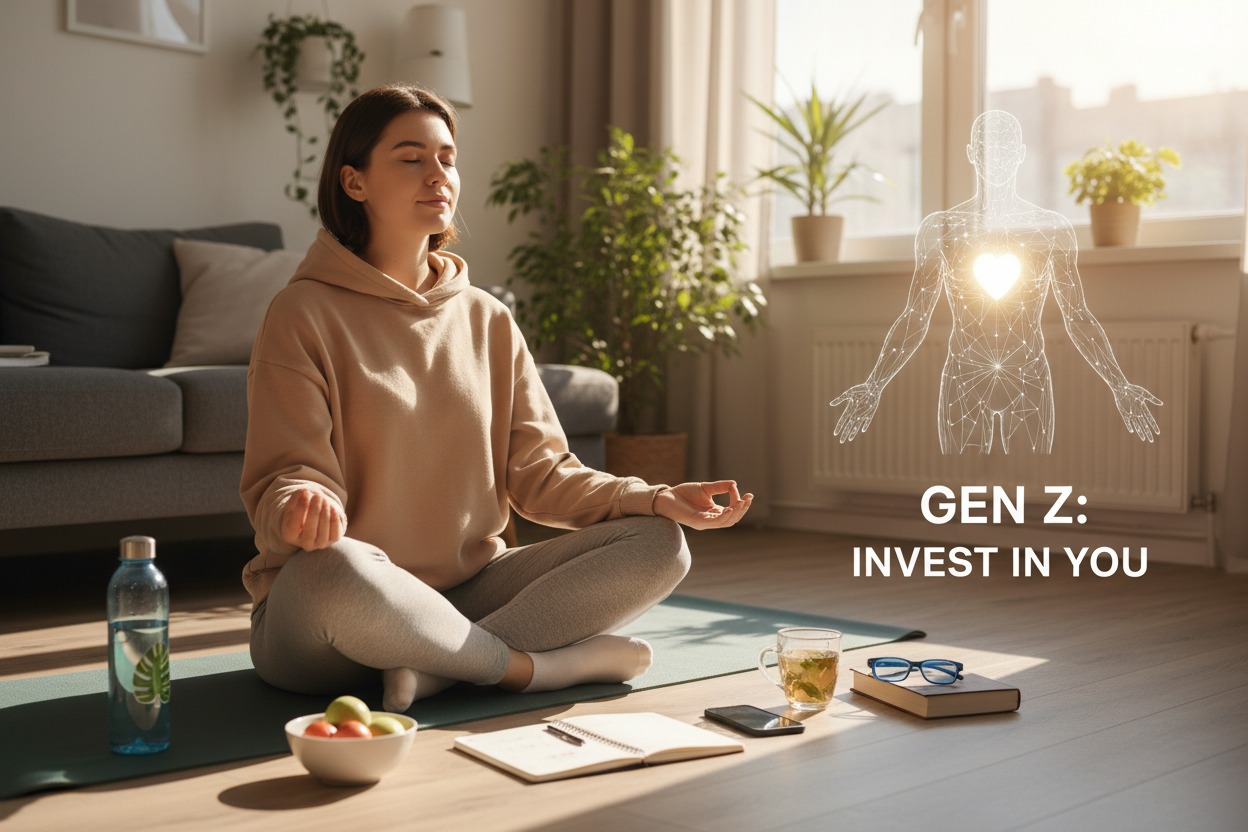
Gen Z Woman meditating
GenZ guy meditating

Most people skip this step.

They jump straight to goals, vision boards, and productivity systems — and then wonder why nothing sticks.

It doesn’t stick because the goals weren’t actually theirs.

They were borrowed from parents, algorithms, peers, or some influencer living a life that looks aspirational on screen and hollow in person.

Social media has given your generation a unique challenge.

You’ve grown up performing your identity through screens in real time, getting instant feedback on who you are and who you’re becoming.

The problem is that identity shaped by likes and validation tends to drift toward popularity.

Ask yourself:

  • What do I genuinely enjoy when no one is watching and there’s nothing to post?
  • What am I good at?
  • What issues should I watch for?
  • What topics do I read about, watch, or think about purely out of curiosity — not because they’re useful or impressive?
  • Who am I in a room full of people who have no idea who I am online?

That person — the one without the audience — is your starting point.

What Do You Value?

Most people can’t name their top five values.

They confuse values with goals (“success,” “wealth”) or morals (“be a good person”).

Values are different.

They’re the non-negotiable conditions under which you function best and feel most like yourself.

Try this: From the list below, circle every word that resonates. Then narrow to your top 10. Then your top 5. Then rank them.

Autonomy, Creativity, Security, Adventure, Connection, Achievement, Impact, Recognition, Learning, Integrity, Loyalty, Freedom, Justice, Family, Belonging, Originality, Stability, Leadership, Fun, Spirituality, Authenticity, Excellence, Service, Influence, Curiosity

Your top five are your compass. When a decision feels wrong even though it looks right on paper, it’s usually because it violates one of these. When a job, relationship, or opportunity feels right even though you can’t fully explain why, it’s usually because it aligns with them.

The Three Selves

You’re operating from three versions of yourself simultaneously, and confusing them creates enormous anxiety:

The Actual Self — who you are right now, honestly
The Ideal Self — who you genuinely want to become
The Ought Self — who you think you should be (usually someone else’s idea of you)

The gap between your actual and ideal self is motivating — it’s the engine of growth.

The gap between your actual self and your ought self is just exhausting. It produces shame and paralysis, not progress.

The work is to close the first gap and dissolve the second.